

10 Signs Your Timber Windows Need Professional Repair
Your timber windows likely need professional repair if you notice visible wood rot, persistent draughts, sticking sashes, peeling paint, condensation buildup, timber cracks, loose hardware, or water leaks. Addressing these early warning signs through targeted timber repair and draught-proofing allows you to preserve the character of your period property while avoiding the high costs of full window replacement.
Timber windows bring character and craftsmanship that modern alternatives often struggle to match. Whether your home has traditional sash windows, casement windows, or original timber frames, regular maintenance is the key to keeping them looking their best and working as they should.
Like any natural material, timber changes over time. Years of exposure to rain, sunlight, and changing weather conditions can lead to wear that isn't always obvious at first. A little peeling paint or a small crack may not seem like much, but these are often early signs that your windows need attention before the problem becomes more extensive.

The good news is that damage doesn't automatically mean replacement. In many cases, well-maintained timber windows can be repaired and restored, helping you preserve the original character of your home while avoiding unnecessary replacement.
If you're unsure whether your windows need professional attention, here are ten common signs to look out for.
10 Signs Your Timber Windows Need Professional Attention
1. Visible Wood Rot or Decay Around the Timber Frame
One of the first things we look for when assessing timber windows is the condition of the wood itself. Timber is an exceptionally durable material, but if moisture has been allowed to penetrate over a long period, areas of decay can begin to develop.
Rot is most commonly found around window sills, lower frame sections, corners, and joints where rainwater naturally collects. You may notice soft timber, discolouration, small cracks, or sections that have started to crumble.
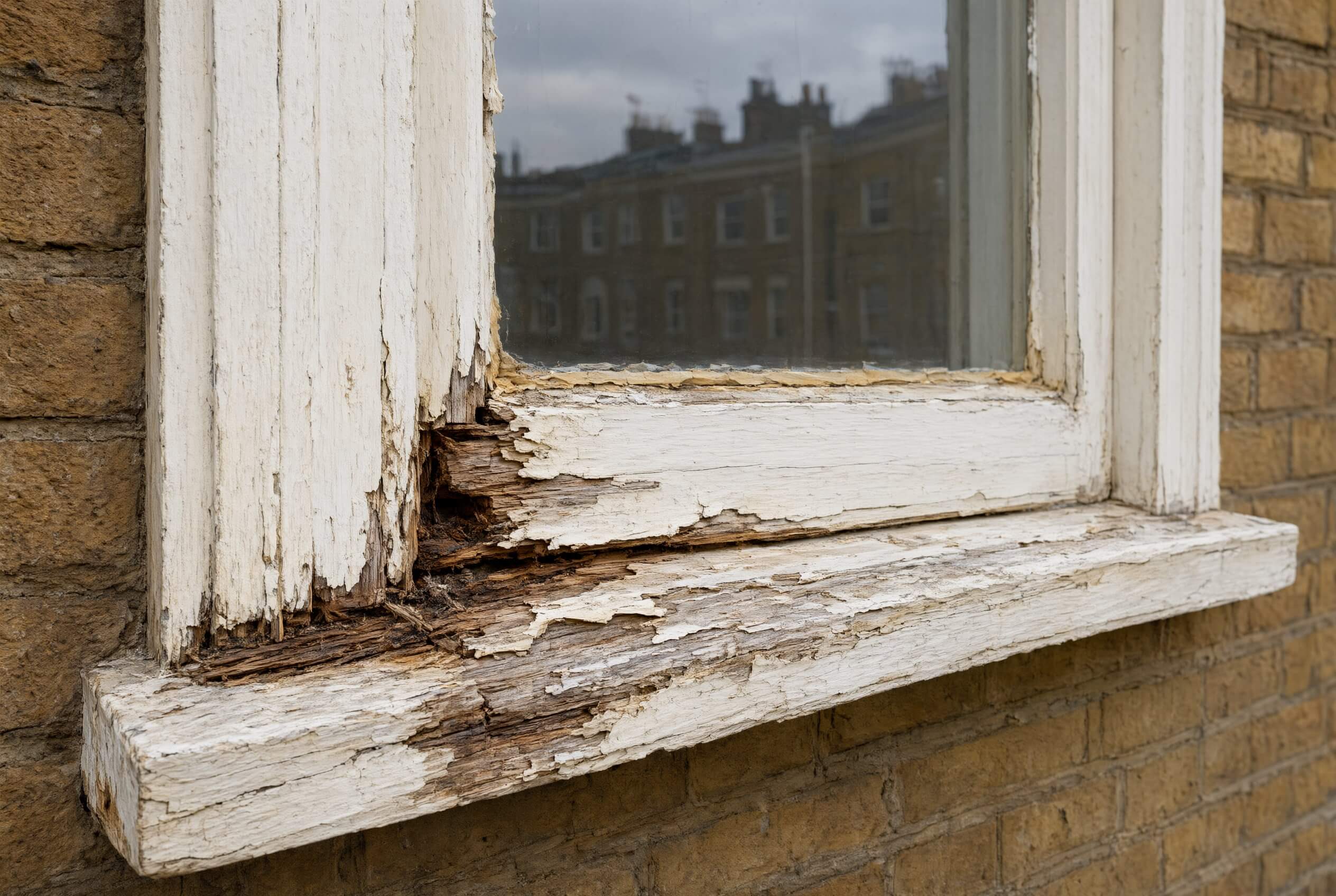
Many homeowners assume that rotten timber means the whole window has reached the end of its life, but that isn't always the case. In many situations, only the affected areas need repairing while the rest of the window remains perfectly serviceable. Repairing localised damage early can prevent it from spreading further into the frame and becoming a much larger job.
If you have traditional sash windows, our guide on How to Restore Sash Windows explains how original timber windows can often be restored rather than replaced.
2. Your Timber Windows Feel Draughty
If you've started noticing cold air around your windows, it's usually a sign that something isn't sealing as it should.
Over time, timber naturally expands and contracts with seasonal changes. Combined with ageing putty, worn draught seals, or general wear, this can create small gaps that allow outside air to enter your home.
Older timber windows weren't originally built to modern standards, but that doesn't mean they have to remain uncomfortable. In many cases, careful repairs, adjustments, and draught-proofing can make a noticeable difference while keeping the original windows in place.
3. Your Windows Are Difficult to Open or Close
Timber windows should open and close smoothly. If they're sticking, becoming stiff, or need extra force to move, it's usually a sign that something needs attention.
This can happen for a number of reasons. Years of repainting may have built up around the moving parts, the timber may have swollen after prolonged exposure to moisture, or components such as hinges, sash cords, or fittings may simply have worn with age.
Continuing to force a window can place additional strain on the frame and its working parts. A thorough inspection will usually identify the cause, allowing the window to be adjusted, repaired, or refurbished without replacing it unnecessarily.
4. Peeling Paint or Cracked Timber Surfaces
Paint does far more than improve the appearance of timber windows. It provides a protective layer that helps keep moisture out and extends the life of the timber beneath.
When that paint begins to crack, blister, or peel away, the exposed wood becomes vulnerable to the weather. If left untreated, moisture can work its way into the timber, increasing the risk of swelling, decay, and more extensive repairs.
5. Condensation Around Your Windows
It's not unusual to see some condensation on windows, particularly during colder months. However, if moisture regularly collects around the frame or you're beginning to notice damp patches, it's worth investigating further.
Persistent condensation can sometimes point to issues such as worn seals, water ingress, or areas where moisture is being trapped around the timber. Over time, this extra moisture can affect both the condition of the window and the surrounding decoration if left unchecked.
6. Cracks, Splits, or Damaged Timber Sections
Small cracks in timber are often easy to overlook, particularly on older windows where a little weathering is expected. However, even minor splits can allow water to penetrate the timber over time, leading to more significant deterioration if they're left untreated.
In many cases, damaged sections can be repaired without replacing the entire window. Repairing localised areas is often a practical way to retain the original character of the property while extending the life of the existing frame.
7. Loose or Damaged Window Hardware
A timber window is only as reliable as the components that allow it to operate properly. Hinges, locks, handles, sash cords, and other fittings naturally wear over time, especially on windows that have seen decades of daily use.
You might notice that a window no longer closes securely, feels loose when opened, or has become harder to lock than it used to. Replacing or repairing these worn components is usually a straightforward way to restore smooth operation without carrying out more extensive work.
8. Water Leaks Around Timber Window Frames
Water finding its way into or around a timber window is never something to ignore. Whether it's a small damp patch beneath the window or signs of staining on the surrounding wall, it's often an indication that moisture is getting where it shouldn't.
The cause can vary—worn paintwork, failed sealant, damaged putty, or small defects in the timber. Dealing with the source of the leak early is usually far more straightforward than repairing widespread water damage later on.
9. Your Timber Windows No Longer Reduce Outside Noise
Well-maintained timber windows can do a good job of reducing everyday noise from outside. If you've recently started noticing more traffic, wind, or general street noise, it may be a sign that your windows are no longer sealing as effectively as they once did.
Small gaps around the frame, worn seals, or windows that no longer close properly can all affect how well they perform. Repairing these issues can often make your home feel noticeably quieter and more comfortable.
10. Your Windows Look Tired and No Longer Perform as They Should
Sometimes it's not one specific problem but a combination of smaller issues—faded paint, worn timber, loose fittings, or sticking sashes. Individually, these problems may seem minor, but together they indicate that your windows would benefit from professional repairs.
If you're weighing up repair against replacement, our guide on Restore Your Period Sash Windows: Why It's Better (and Cheaper) Than Replacing explains why restoration is often worth considering.
When Should You Contact a Timber Window Repair Specialist?
Small issues are always easier to deal with before they develop into larger ones. If you've noticed signs of rot, recurring draughts, sticking windows, water ingress, or cracked timber, it's sensible to have them checked rather than waiting for the damage to worsen.
A professional inspection helps establish whether the window can be repaired, what work is required, and whether any underlying issues need addressing to prevent the same problem from returning. In many cases, early repairs are less disruptive and more cost-effective than leaving problems until significant deterioration has occurred.
What Does Timber Window Repair Involve?
No two timber windows are exactly the same, so the work required will always depend on their condition.
- Thorough Inspection The frame, moving parts, paintwork, glazing, and any areas showing deterioration are evaluated to identify the cause of the issue.
- Timber Restoration Damaged or decayed timber is surgically removed and repaired using appropriate restoration techniques while preserving as much original wood as possible.
- Hardware & Draught-Proofing Worn hardware is replaced, draught seals are fitted, and moving components are adjusted so sashes operate smoothly.
- Surface Protection The repaired timber is fully prepared, primed, and painted to withstand future weather exposure.
If you'd like to understand more about the full process, our detailed guide on What Does Timber Window Refurbishment Involve? explains the different stages in more detail.
How to Help Your Timber Windows Last Longer
Looking after timber windows doesn't have to be complicated, but a little routine maintenance can make a significant difference over the years:
- Inspect your windows regularly to spot peeling paint, small cracks, or moisture early.
- Keep paintwork in sound condition to maintain the protective barrier.
- Ensure water drainage paths around sills remain clear.
- Deal with minor hardware or timber repairs promptly before decay sets in.
Frequently Asked Questions
How do I know if my timber windows need repairing?
Common signs include timber rot, peeling paint, draughts, difficulty opening or closing the window, water ingress, and visible cracks in the frame. If you've noticed one or more of these issues, it's worth arranging an inspection before the damage becomes more extensive.
Can rotten timber windows be repaired?
In many cases, yes. Localised areas of decay can often be repaired without replacing the entire window. The best approach depends on how far the damage has spread and the overall condition of the frame.
Is repairing timber windows better than replacing them?
Every window is different. If the original frame is still in good structural condition, repair can often be a practical solution that preserves the character of the property while extending the life of the window.
How long do timber window repairs last?
When repairs are carried out correctly and the windows continue to receive regular maintenance, they can provide many years of reliable service. Ongoing care plays an important role in protecting the timber and preventing future problems.
Can older timber windows be made more comfortable?
Yes. Repairs, draught-proofing, and replacing worn components can all improve how well older timber windows perform, while retaining their original appearance.
Protect Your Timber Windows Before Small Problems Become Bigger Ones
Timber windows are built to last, but like any part of your home, they benefit from regular care and timely repairs. Problems such as peeling paint, draughts, water ingress, or localised timber decay rarely improve on their own, and dealing with them early can help prevent more extensive work later.
If you've noticed any of the signs covered in this guide, it's worth having your windows assessed before the damage progresses. In many cases, thoughtful repairs can restore both the appearance and performance of your existing timber windows, allowing you to preserve their character for years to come.
Need Professional Timber Window Repairs?
Get a free, no-obligation assessment from London's trusted timber window specialists. Preserve your period character and restore performance.
Request Your Free Quote